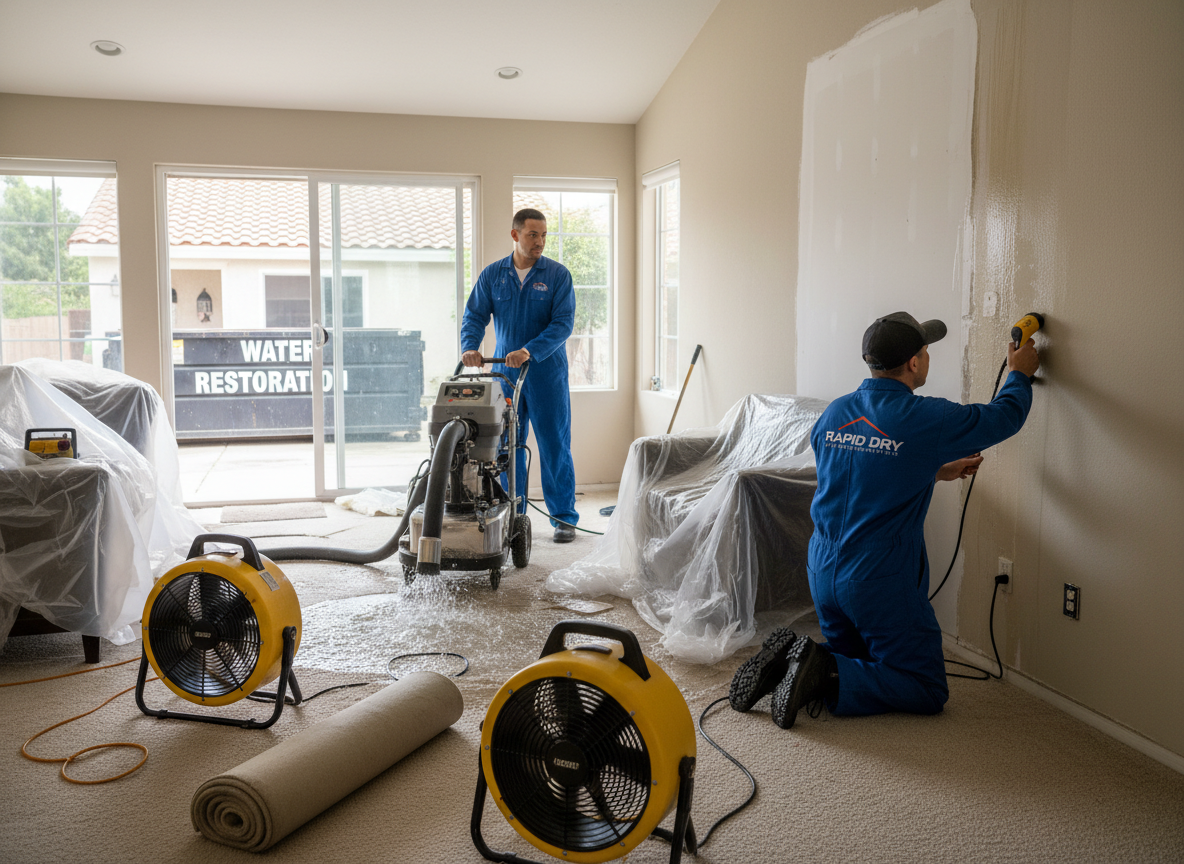
Tujunga homes built before 1970 often feature plaster walls over wood lath and galvanized supply lines that corrode along the Foothill Trails slopes. When a pinhole leak develops behind a bathroom wall, water travels downward along the studs and pools against the concrete slab, especially during the mild winter rains that follow hot dry summers. Restoration crews must open the wall from floor to ceiling, extract moisture from the subfloor, and treat the framing before mold colonies form in the enclosed cavities common to these older structures.
Proximity to the Tujunga Wash and Angeles National Forest drainage increases hydrostatic pressure on foundations after storms. Leaks originating at slab penetrations or failed shower pans frequently migrate into neighboring units in Sunland duplexes. Technicians use moisture meters calibrated for local soil types and install temporary negative-air machines to keep spores from migrating into living spaces while the source is isolated and the affected materials are removed.
Los Angeles County building codes require permits for any structural drying that involves cutting load-bearing members. Crews document every step with photos and moisture logs so homeowners can satisfy insurance adjusters without delays. In Shadow Hills and Sylmar border properties, hillside lots add the complication of water migrating laterally through retaining walls, requiring targeted injection of sealants after the initial extraction.
After drying, antimicrobial coatings are applied only to porous materials that cannot be replaced, and new drywall is hung with the correct fire-rated type where required by code. Final verification uses pinless meters and thermal imaging to confirm equilibrium moisture levels before any finishes are reinstalled.
Technician insight
In Tujunga the thing that catches most people out with water leak restoration is how quickly moisture travels laterally through the old plaster-and-lath walls once it hits the Tujunga Wash drainage patterns. Homeowners often stop at the obvious stain and miss the water that has already wicked into the framing on the downhill side of Foothill Trails lots.
Hidden Slab Leak in Tujunga Village
A kitchen floor began buckling after winter rains. Inspection revealed a failed copper elbow under the slab that had been feeding water toward the Tujunga Wash side of the lot. Crews isolated the line, removed the saturated underlayment, and dried the subfloor for five days before installing new tile that matched the original 1960s layout.
How it works
- 1
Source Identification
Technicians inspect supply lines, waste pipes, and roof flashings using the address at 6350 Foothill Blvd as the starting point for mapping water travel paths through Tujunga Village homes.
- 2
Water Extraction and Containment
Standing water is removed with truck-mounted equipment while temporary barriers prevent cross-contamination into unaffected rooms common in Foothill Trails layouts.
- 3
Drying and Monitoring
Air movers and dehumidifiers run continuously with daily meter readings until drywall and framing reach acceptable moisture content for the Mediterranean climate.
- 4
Sanitization and Reconstruction
Affected materials are treated or replaced, followed by permit-compliant repairs that match the original construction details of older Tujunga properties.
Pricing
Upfront quotes are provided after inspection; final cost depends on access difficulty and extent of hidden damage in older hillside homes.