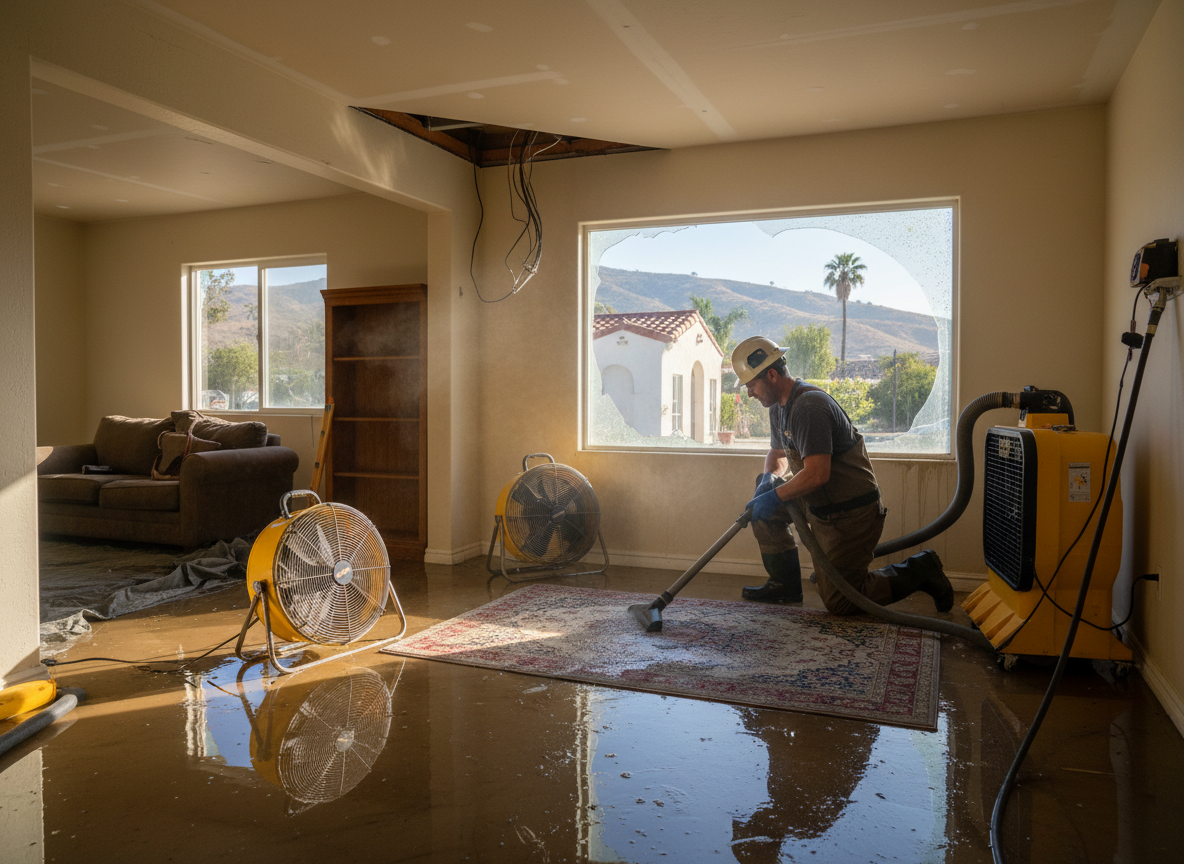
Tujunga homes built before the 1970s often sit on raised foundations or have crawl spaces that trap water after heavy winter rains. Water from the Tujunga Wash can back up into yards in Foothill Trails and Sunland, then wick into stucco walls and hardwood floors. Mitigation starts with stopping the source, then removing standing water and pulling moisture from cavities before mold sets in. Los Angeles County code requires proper disposal of contaminated materials when Category 3 water is involved, which changes the sequence on jobs near the wash.
Hot dry summers here bake saturated soil and can cause hidden moisture to migrate upward into slab-on-grade homes in Tujunga Village. Technicians use moisture meters on concrete and thermal imaging behind cabinets to locate pockets that standard fans miss. In Shadow Hills and Sylmar properties with older plaster, walls must be opened in sections rather than stripped entirely to preserve structure while still achieving drying targets. Skipping these steps leaves residual humidity that reactivates when the next storm arrives.
Mild winters mean repeated small leaks from roof valleys or hillside drainage rather than single massive floods. Each event requires documenting affected square footage and material types before any drying equipment is placed. Crews coordinate with local waste rules for disposing saturated drywall and carpet padding, especially on Bolton Hall Museum-adjacent streets where older construction is common.
Technician insight
In Tujunga the thing that catches most people out with water damage mitigation is how Tujunga Wash overflow soaks the clay-heavy soil around older Foothill Trails foundations and then travels under the slab for weeks after the rain stops.
Crawl Space Saturation After Wash Overflow
Heavy winter rain pushed Tujunga Wash water into a Sunland yard and under a 1960s home. We found standing water and saturated insulation in the crawl space extending toward the street. Extraction and targeted drying prevented mold growth in the floor joists before the next dry spell.
How it works
- 1
Source Stop And Safety
Locate and stop active water entry from roof, plumbing or surface runoff, then secure the structure and protect unaffected areas.
- 2
Water Extraction
Remove standing water with portable pumps and extractors, focusing on low spots common in Tujunga lots near the wash.
- 3
Moisture Mapping
Use meters and imaging to identify hidden saturation in walls, floors and crawl spaces typical of pre-1970 homes in Foothill Trails.
- 4
Drying And Monitoring
Place air movers and dehumidifiers, then check daily readings until materials return to local equilibrium moisture levels.
Pricing
Upfront quotes after inspection; cost driven by water category, square footage and access to hidden areas in older Tujunga construction.