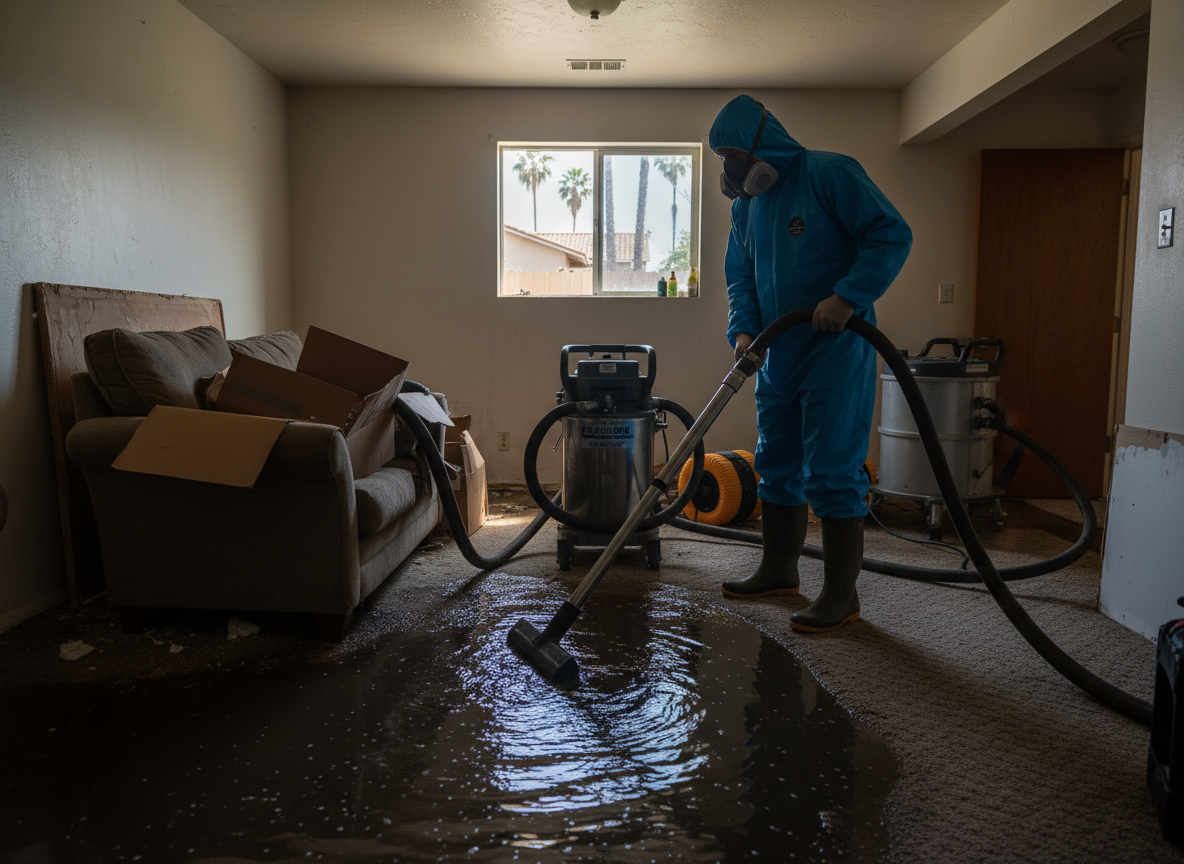
Tujunga sits in Los Angeles County with a Mediterranean climate of hot dry summers and mild winters that still bring enough rain to push water down the slopes toward the Tujunga Wash. Homes in Tujunga Village and Foothill Trails often date from the 1940s to 1960s, built on hillsides with crawl spaces or raised foundations that trap moisture when water runs off the nearby Angeles National Forest. During winter storms, water follows natural drainage paths through Sunland and Shadow Hills, seeping under stucco or into older plaster walls before homeowners notice.
Cleanup crews must pull baseboards early and check under hardwood floors because the dry summer months mask how much water the soil still holds. In Sylmar-adjacent pockets, older plumbing and flat lots near Bolton Hall Museum mean slab leaks can travel under concrete without obvious surface signs. Technicians use moisture meters on every visit because skipping hidden pockets leads to mold that reappears after the next rain cycle.
Extraction starts with pumps and wands rated for the volume coming off the wash, then moves to air movers and dehumidifiers sized for the thick plaster walls common in these neighborhoods. Crews document every step for insurance because Los Angeles County properties near the forest often sit in zones that trigger extra scrutiny after declared storms.
Final verification includes checking subfloors in garages and laundry rooms where water from the wash tends to pool. Leaving even small amounts behind means callbacks when summer heat pulls residual moisture back into living spaces.
Technician insight
In Tujunga the thing that catches most people out with water cleanup services is how winter rain funnels straight down the slopes into crawl spaces under 1950s homes in Foothill Trails. Homeowners often stop at the wet carpet and miss the water that keeps wicking up from the soil along the Tujunga Wash for weeks afterward.
Hidden moisture after wash overflow
A homeowner in Tujunga Village called after heavy rain pushed water under the house from the Tujunga Wash. We found saturated soil against the foundation and moisture traveling into the subfloor. Extraction and drying equipment ran for four days until readings stabilized. The home dried without mold growth or flooring replacement.
How it works
- 1
Arrival and Containment
Technicians park at the Foothill Blvd address and set up barriers to stop water from spreading into unaffected rooms.
- 2
Water Removal
Pumps and extraction wands pull standing water from floors and crawl spaces before it migrates toward the Tujunga Wash drainage.
- 3
Drying and Monitoring
Air movers and dehumidifiers run while moisture readings are taken daily on plaster, hardwood, and concrete in older Tujunga homes.
- 4
Final Verification
Return visits confirm dryness before walls and floors are closed, preventing hidden issues common after winter rains.
Pricing
Upfront quotes after inspection account for home age, water volume, and access to hillside lots near the wash.