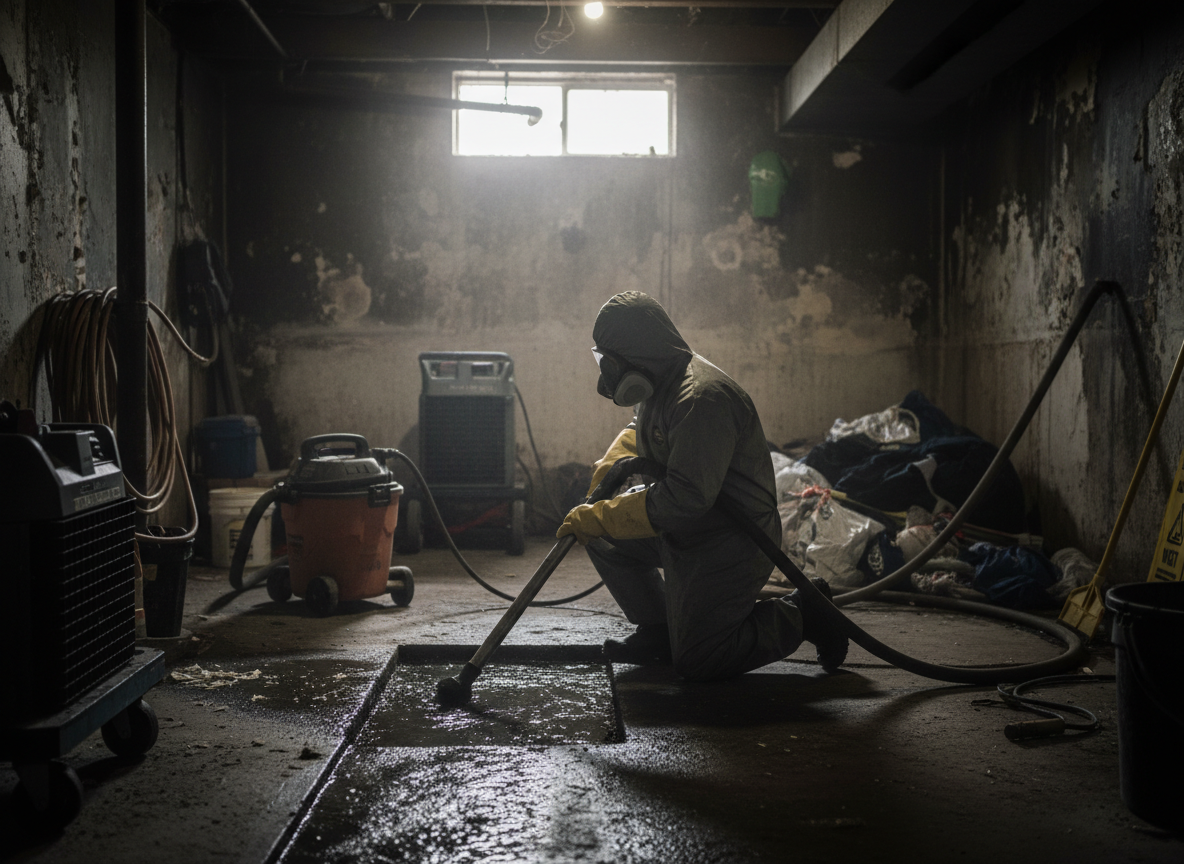
Tujunga sits in Los Angeles County with many homes built before 1960 in Tujunga Village and along Foothill Trails. These older properties often have cast iron or clay sewer lines that crack from ground movement near the Tujunga Wash. When winter rains hit the Mediterranean climate pattern, stormwater can overwhelm aging municipal lines and push sewage into basements or crawl spaces. Cleanup crews must account for the dry, compacted soil that limits natural drainage and forces more aggressive extraction methods.
Sewage events near Angeles National Forest edges or in Shadow Hills frequently involve gray water mixed with storm debris. Technicians first isolate the affected zone to prevent cross-contamination into living areas, then remove standing water and saturated drywall or insulation before bacteria can migrate. Los Angeles County health codes require documented moisture readings below 15 percent and negative air pressure during the process. Skipping these steps in hillside homes with limited ventilation leads to recurring odors and failed inspections.
After extraction, crews apply hospital-grade disinfectants to concrete slabs and subfloors common in Sunland and Sylmar border properties. Porous materials like particleboard cabinets or carpet padding are removed entirely because they retain pathogens even after drying. Final clearance testing confirms safe re-entry, especially important for households near Bolton Hall Museum where older plumbing ties directly into shared laterals prone to root intrusion.
Technician insight
In Tujunga the thing that catches most people out with sewage cleanup is the hilly terrain around Foothill Trails and Tujunga Village. Older cast-iron lines crack from soil shift, and when rain finally arrives the water has nowhere to go but back into the house because the compacted ground won't absorb it.
Backup into Sunland crawl space
Heavy rain caused a main line failure that pushed sewage under a 1950s home near Tujunga Wash. We found standing water and saturated insulation across half the crawl space. Extraction, removal of affected materials, and targeted disinfection restored safe conditions within four days.
How it works
- 1
Initial Assessment
Technician inspects the source, maps affected rooms, and checks for hidden moisture in walls and under flooring.
- 2
Containment and Extraction
Barriers are set up, standing sewage is pumped out, and contaminated materials are bagged for disposal.
- 3
Cleaning and Disinfection
All surfaces receive antimicrobial treatment followed by HEPA air scrubbing to remove airborne particles.
- 4
Drying and Verification
Industrial dehumidifiers and air movers run until moisture levels meet county standards, then final testing is performed.
Pricing
Cost depends on square footage affected, depth of contamination, and whether structural materials must be removed.