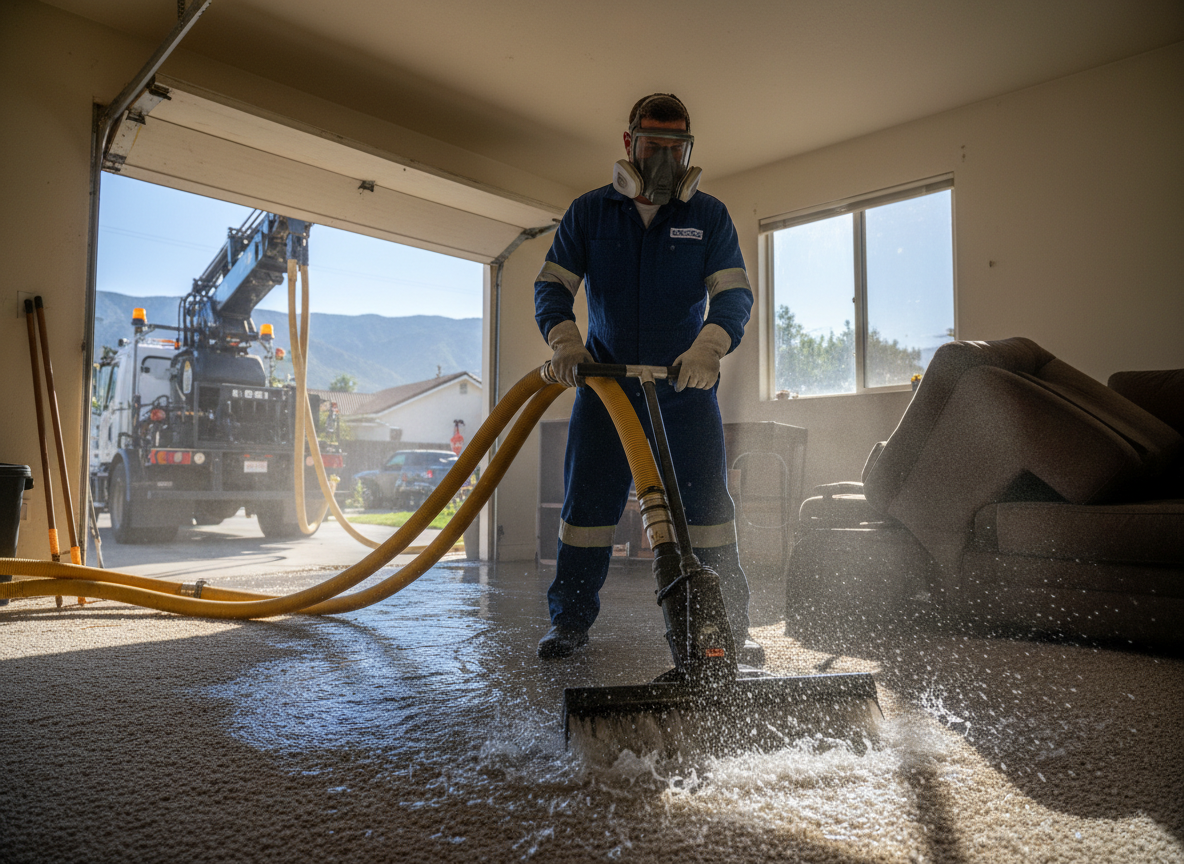
Rapid water extraction in Tujunga often starts with properties along the Tujunga Wash where winter rains hit hard after months of dry Mediterranean weather. Older homes in Foothill Trails and Tujunga Village frequently have crawl spaces and slab foundations that trap water against stucco and older plaster walls. Crews use truck-mounted extractors and moisture meters to pull standing water before it migrates into framing or reaches Bolton Hall Museum area basements. Delaying extraction here lets silt from the nearby Angeles National Forest settle into carpet pads and hardwood, raising the risk of hidden mold in Los Angeles County humidity pockets.
Homes in Sunland and Shadow Hills sit on slopes that direct runoff toward foundations during sudden downpours. Extraction teams must account for the way water follows utility trenches in these hillside lots, often requiring entry through side yards rather than front doors. Portable pumps handle the initial draw-down while infrared cameras locate moisture behind kitchen cabinets common in 1950s and 1960s Sylmar-adjacent builds. Skipping this step leaves residual water that later surfaces as warped baseboards once the dry season returns.
Edge cases include extraction around septic systems common in parts of Tujunga Village and avoiding electrical hazards in older wiring found in many Foothill Blvd corridor homes. Crews document water levels and extraction volumes for insurance adjusters working Los Angeles County claims. Proper sequencing prevents structural shifts in homes built on the area's variable soil that expands when saturated.
Technician insight
In Tujunga, the thing that catches most people out with rapid water extraction is how Tujunga Wash overflow after a dry summer soaks the older slab edges in Foothill Trails homes before anyone notices; the silt it carries hides in subfloors and defeats quick drying unless you pull it the same day.
Wash Overflow into Tujunga Village Crawl Space
Heavy winter rain sent Tujunga Wash water under a 1960s home in Tujunga Village. We found silt-laden water filling the crawl space and wicking into floor joists. Portable pumps removed the bulk while we mapped moisture into the kitchen slab. Extraction finished before the next dry spell allowed hidden mold to form.
How it works
- 1
Arrival and Assessment
Technicians reach the site within hours, map water migration through Tujunga foundations, and identify affected zones near the wash or forest slopes.
- 2
Standing Water Removal
Truck-mounted and portable pumps extract bulk water while protecting older plaster and hardwood typical in Foothill Trails homes.
- 3
Moisture Mapping
Infrared scans locate hidden saturation in walls and subfloors before the dry season allows mold to establish.
- 4
Final Extraction and Drying Setup
Remaining moisture is pulled and air movers are positioned to finish the job without disturbing nearby properties in Sunland or Sylmar.
Pricing
Pricing depends on water volume, access difficulty on sloped lots, and whether work occurs in crawl spaces common to pre-1970 Tujunga homes; upfront quotes are provided after inspection.