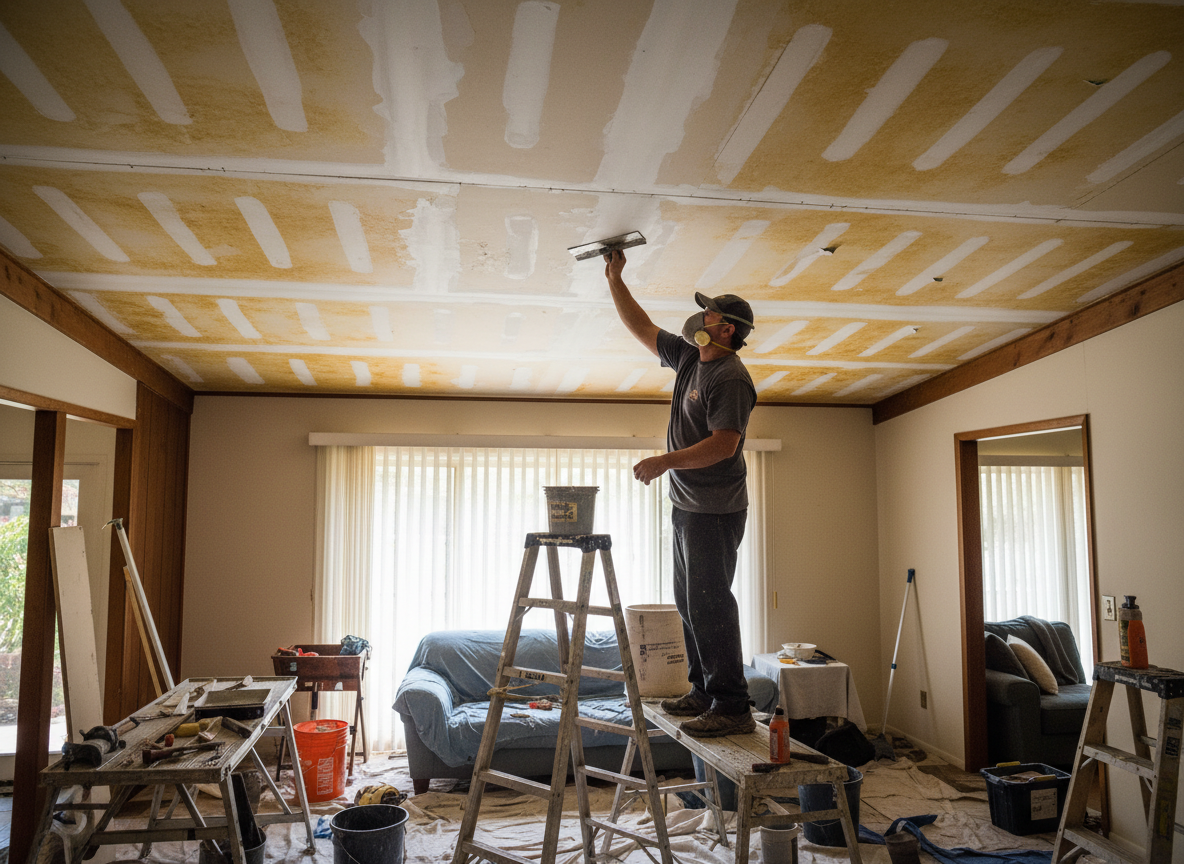
Tujunga homes built before the 1970s often feature plaster-over-lath ceilings that absorb water differently than modern drywall. When leaks originate from roof valleys or second-floor plumbing, moisture travels along the lath and shows up as sagging or staining several feet from the source. Technicians must remove enough material to inspect joists while preserving as much original plaster as possible to avoid costly full-room replacements common in Foothill Trails properties.
The Mediterranean climate brings concentrated winter rainfall that funnels off the Angeles National Forest slopes into Tujunga Wash and surrounding drainages. This creates sudden roof leaks at flashing points around Bolton Hall Museum-era homes and in Sunland bungalows. Once water reaches the ceiling cavity, trapped humidity lingers even after the rain stops because mild daytime temperatures slow evaporation, raising the risk of hidden mold growth behind the surface.
Access is frequently complicated by cathedral ceilings or acoustic tile overlays added during later remodels in Shadow Hills and Sylmar-adjacent streets. Removing these layers without damaging adjacent finishes requires careful scoring and temporary shoring. Every job includes checking for compromised electrical runs and insulation that may have wicked moisture into wall cavities below.
Final restoration must match the surrounding texture exactly because Los Angeles County inspectors notice obvious patches during resale inspections. Using multiple skim coats and feathering the compound into original plaster prevents telegraphing after paint is applied.
Technician insight
In Tujunga the thing that catches most people out with Ceiling water damage repair is how water from the Angeles National Forest side of the hills travels along ceiling joists in pre-1960 homes and pools above the Tujunga Wash side of the property, so the visible stain is rarely where the actual leak entered.
Hidden Leak Behind Acoustic Tile in Foothill Trails
A homeowner in Foothill Trails noticed brown rings on the living room ceiling after a winter storm. Removal of the acoustic tile overlay revealed water had traveled along joists from a roof valley near the Tujunga Wash drainage. The crew opened a three-foot section of plaster, dried the cavity over four days, and reinstalled material with a hand-applied texture that matched the 1950s original.
How it works
- 1
Inspection and Moisture Mapping
Technicians trace water paths from the roof or upper floor using meters and infrared cameras to locate the full extent of saturation in Tujunga ceilings.
- 2
Containment and Water Removal
Affected rooms are isolated and standing water is extracted before ceiling materials are opened to prevent further migration into living spaces.
- 3
Damaged Material Removal
Sagging plaster or drywall sections are cut out, with edges feathered to allow clean blending during later repair.
- 4
Drying and Antimicrobial Treatment
Air movers and dehumidifiers dry the cavity, followed by treatment to inhibit mold growth common after Tujunga winter rains.
- 5
Ceiling Restoration and Texture Match
New material is installed, taped, and textured to match the original finish before priming and painting.
Pricing
Cost depends on ceiling height, extent of hidden damage, and whether plaster or drywall must be matched.