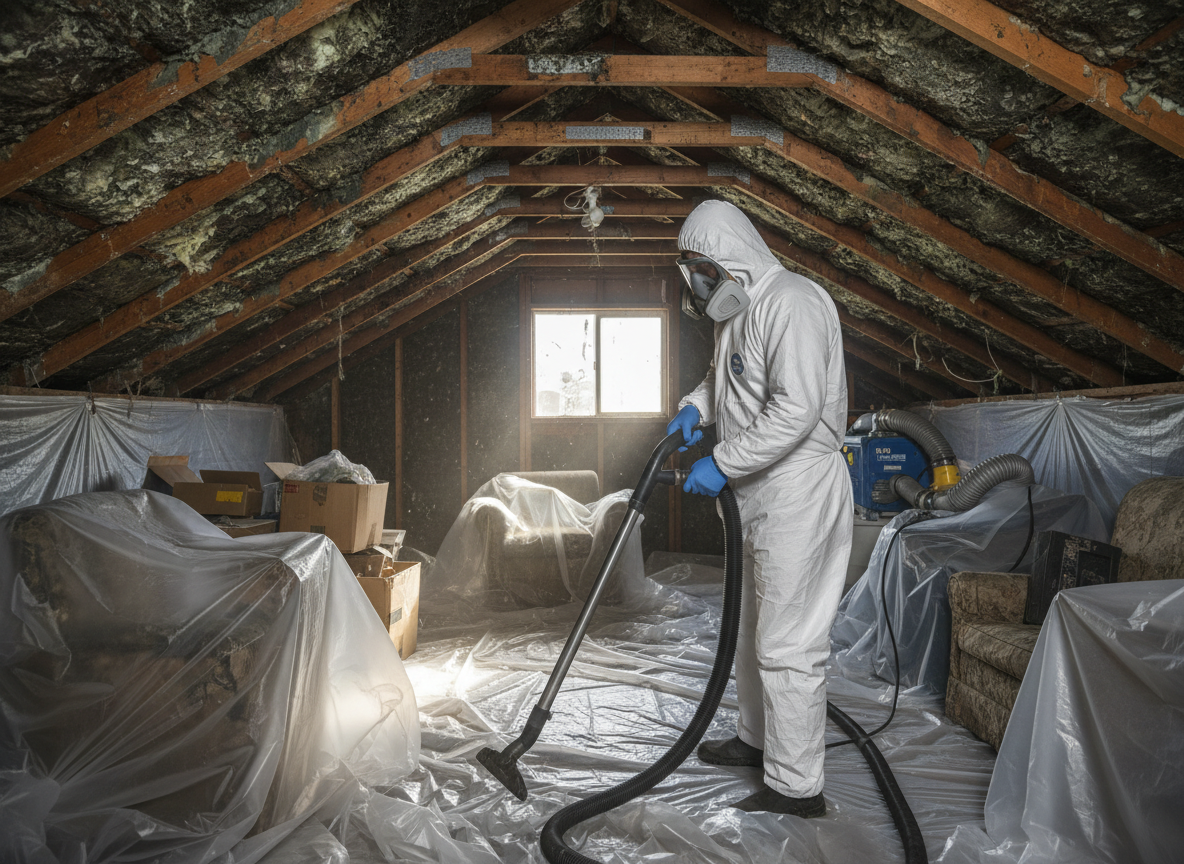
Tujunga sits in Los Angeles County with many single-story homes built before 1970 in neighborhoods like Tujunga Village and Foothill Trails. These properties often have vented attics with original insulation that holds moisture when winter rains hit the San Gabriel foothills. Water from minor roof penetrations or condensation travels along rafters and pools in low spots, feeding mold colonies that homeowners only notice once ceiling stains appear in living areas below.
Dry summers here accelerate the problem once mold is disturbed. Spores become airborne during removal if containment is not sealed properly against the attic hatch and HVAC returns. Crews must account for the steep terrain near the Angeles National Forest boundary, where access to some Foothill Trails properties requires equipment carried up narrow driveways. Negative air machines and HEPA filtration stay running until post-remediation testing clears the space.
Nearby Sunland and Sylmar share the same older housing stock and similar exposure to Tujunga Wash flooding that can back up into crawl spaces and attics. Remediation includes removing affected insulation, treating rafters with EPA-registered antimicrobials, and improving ventilation to prevent recurrence during the next mild winter. Homeowners in Shadow Hills often request the same protocol after discovering mold following wind-driven rain events.
Seasonal Moisture Patterns
Tujunga's Mediterranean climate brings most rainfall between December and March. Attics stay cool at night, creating condensation on sheathing even after the rain stops. This cycle repeats for weeks and explains why mold appears months after the last storm.
Technician insight
In Tujunga the thing that catches most people out with attic mold remediation is how the steep lots in Foothill Trails let winter rain run under older composition shingles for months before it shows up inside. Homeowners think the dry summer fixed it, but the insulation is already holding the moisture.
Hidden Leak Behind Tujunga Village Chimney
Water from a cracked flashing above a brick chimney entered the attic during February rains. We found saturated cellulose insulation along two rafter bays and active mold on the north-facing sheathing. After removing the insulation and treating the wood, we installed additional ridge vents to improve airflow before reinstalling new insulation.
How it works
- 1
Inspection and Moisture Mapping
Technicians enter the attic from the exterior access when possible and use moisture meters on rafters and sheathing to locate every wet zone.
- 2
Containment Setup
Plastic barriers seal the attic opening and any HVAC returns before negative air machines begin pulling air through HEPA filters.
- 3
Removal and Treatment
Wet insulation is bagged and removed. Rafters and plywood receive antimicrobial application followed by drying with air movers positioned on the roof slope.
- 4
Clearance Testing
Independent air sampling confirms spore counts have returned to normal outdoor levels before barriers come down.
Pricing
Pricing depends on attic size, extent of insulation removal, and whether roof repairs are needed before treatment finishes.